Thursday, November 13, 2014

Thorium Reactors

Thorium reactors are the future of energy. They are a more advanced nuclear reactor allowing them to be more safe. Thorium reactors works by heating water to a boil by the fission of Uranium-233. Uranium-233 is harvested from the abundant material thorium. thorium is much cheaper and easier to mine than uranium so it is more cost effective. Thorium reactors also produce more energy, and less waste than Uranium reactors. The only set back of replacing Uranium reactors with Thorium reactors is the start up costs. The start up cost is extremely expensive, around 1.1 billion dollars. Companies would definitely need some financial help from the government for these reactors to come into fruition so we may see some tax raises or new taxes, but the benefits we can reap from these reactors are amazing. The integration for this system is extremely easy, it works just the same as a Uranium power plant. The steam turns a turbine, the turbine generates electricity, the electricity goes through wires to a grid where it is stored and distributed. Unfortunately once the reactor is in place and hooked up to a power grid, it is very difficult to change grids or not use a grid at all. Even though there are a few drawbacks to Thorium reactors, we should invest in them because of the benefits they offer. They are not nearly as dangerous as Uranium reactors, the produce more energy, and they produce less waste than previous reactors. Thorium is also four times as abundant as Uranium, estimates say that strictly using thorium, there is enough of it to power the United States for 1,000 years. That amount of energy would solve our energy problems until the year 3,000. One ton of Thorium produces as much energy as 200 tons of Uranium, and 3.5 million tons of coal. It is also a lot safer because it is nearly impossible to create a practical nuclear weapon from Thorium waste. There is also a fail safe plug at the bottom of the reactor so that if something happens and the Thorium gets too hot, it melts the plug and is drained into a tank for safe keeping eliminating the risk of a meltdown. Thorium is also much easier to mine. Ore deposits generally contain more Thorium than they do Uranium, and they congregate in larger deposits. This makes mining it safer, more cost efficient, and more environmentally friendly than mining Uranium. It is time to make the switch to Thorium reactors.

Sources:

  • http://en.wikipedia.org/wiki/Liquid_fluoride_thorium_reactor

  • http://en.wikipedia.org/wiki/Thorium-based_nuclear_power
    • http://www.world-nuclear.org/info/Current-and-Future-Generation/Thorium/


    Monday, November 3, 2014

    Chernobyl

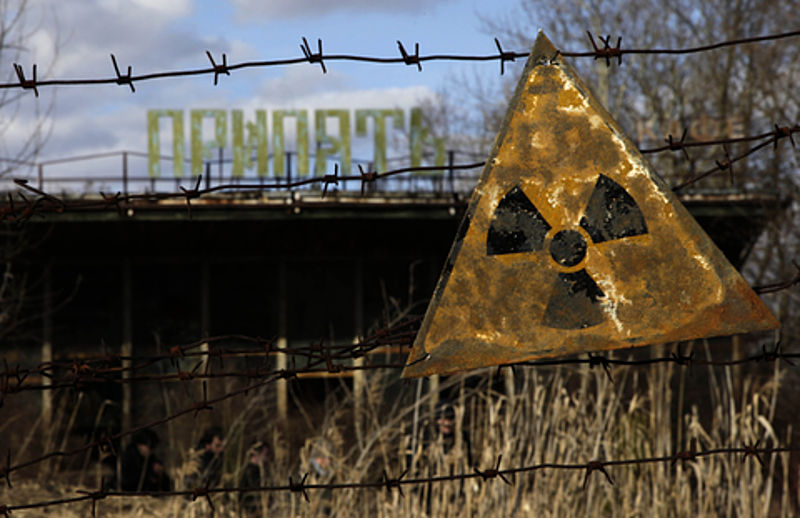
    Chernobyl was a disastrous event in history where there was a nuclear meltdown that made a nuclear wasteland in Ukraine. Chernobyl was a nuclear power plant that was running routine tests when it all went horribly wrong. When the workers at the nuclear power plant shut down reactor 4 in an emergency situation test, there was a sudden spike in power causing the nuclear rods to heat up and cause the water coolers to turn to steam and explode from the pressure. The explosion revealed the graphite moderator to air which in turn reacted and exploded sending fire and radioactive material into the air. The immediate explosion killed 31 workers but the nuclear fallout caused many more problems that are still apparent today. The death toll due to radiation in 2008 was 64 people. The majority of the radiation deaths were from cleanup workers or other workers who were on site when the explosion happen. Other deaths include children who got cancer from nearby towns and cities along with others. The explosion did not just affect people, it affected the environment as well. Groundwater in some places became to dangerous to drink. A forest directly downwind from Chernobyl turned red then died. A massive reservoir, Dneiper, became dangerous to drink, although it became safe again shortly after. Chernobyl was classified as a class 7 disaster, the highest class of nuclear disaster. The area affected by the disaster is unparalleled by any other disaster having an effect on 162,000 square miles around the plant. The response to this disaster was way under par. After the explosion, no one alerted the nearby city Pripyap and several people fell ill and got radiation sickness. It wasn't until a day later did they announce that there had been an explosion and that people should evacuate. The only announcement that was made to the world was a twenty second broadcast that hardly told anyone what had happened. The announcement was as following: 
    There has been an accident at the Chernobyl Nuclear Power Plant. One of the nuclear reactors was damaged. The effects of the accident are being remedied. Assistance has been provided for any affected people. An investigative commission has been set up.
    —Vremya, 28 April 1986 (21:00)
    The evacuation was set up and announced as followed:
     For the attention of the residents of Pripyat! The City Council informs you that due to the accident at Chernobyl Power Station in the city of Pripyat the radioactive conditions in the vicinity are deteriorating. The Communist Party, its officials and the armed forces are taking necessary steps to combat this. Nevertheless, with the view to keep people as safe and healthy as possible, the children being top priority, we need to temporarily evacuate the citizens in the nearest towns of Kiev Oblast. For these reasons, starting from April 27, 1986 2 pm each apartment block will be able to have a bus at its disposal, supervised by the police and the city officials. It is highly advisable to take your documents, some vital personal belongings and a certain amount of food, just in case, with you. The senior executives of public and industrial facilities of the city has decided on the list of employees needed to stay in Pripyat to maintain these facilities in a good working order. All the houses will be guarded by the police during the evacuation period. Comrades, leaving your residences temporarily please make sure you have turned off the lights, electrical equipment and water and shut the windows. Please keep calm and orderly in the process of this short-term evacuation.
    —Evacuation announcement in Pripyat, 27 April 1986 (14:00)
    The evacuation came after over 60 people were affected by the radiation with 2 deaths.